10 Shocking Facts That Explain the Real Cause of Lightning
Lightning has dazzled and terrified humanity for millennia. For centuries, we believed we had it figured out—static electricity building up in storm clouds until a giant spark leaps to the ground. But as scientists like physicist Joseph Dwyer have discovered, the true story is far stranger and more fascinating. Dwyer, who once studied solar flares from a million miles away using NASA’s Wind satellite, turned his attention to Earth’s lightning after moving to Florida and realized our old models don’t add up. What follows are ten eye-opening facts that reveal the real, and still evolving, science behind lightning.
1. The Old Model of Lightning Is Actually Wrong
For decades, textbooks taught that lightning happens when ice particles inside a storm cloud rub together, building up static charge until a giant spark discharges. But this simple idea has a huge problem: it can’t explain how the first spark actually starts. The electric fields measured inside thunderstorms are far too weak to overcome the insulating properties of air. So how does lightning even begin? This mystery—called the “lightning initiation problem”—has forced scientists to look for entirely new mechanisms, and the answers are rewriting the textbooks.
2. Cosmic Rays May Be the Trigger
One of the most surprising candidates for lightning’s trigger is cosmic rays—high-energy particles that blast through space and constantly rain down on Earth. These particles, mostly from supernovae and the Sun, can slam into air molecules, creating showers of secondary particles. Physicists propose that these cosmic-ray showers can create a “runaway breakdown” effect, where a small number of electrons get boosted to near-light speed, colliding with other molecules and creating an avalanche of charge. This avalanche could be the missing spark that initiates lightning. Observations and lab experiments are now testing whether cosmic rays truly play this role.
3. Joseph Dwyer’s Shift from Space to Storms
Joseph Dwyer didn’t start his career studying lightning. He began by analyzing solar flares using NASA’s Wind satellite, which orbits a million miles from Earth, observing how particles stream from the Sun. When he relocated to Florida around 2000, he became fascinated by the frequent thunderstorms and realized the same fundamental plasma physics that powers solar flares might apply to lightning. This bold connection led Dwyer to propose that lightning might be driven by relativistic electrons and runaway breakdown—an idea that was initially controversial but is now central to modern lightning research.
4. Runaway Breakdown: The Key Mechanism
In runaway breakdown, a small population of electrons gets accelerated by thunderstorm electric fields to relativistic speeds (near the speed of light). At these velocities, they collide with air molecules and knock loose even more electrons, creating an exponential “runaway” cascade. This process can happen even in electric fields that are far weaker than what would be needed for traditional breakdown. The theory explains how lightning can start in conditions previously thought impossible. Experiments using high-voltage labs and rocket-triggered lightning have confirmed that such high-energy electrons exist right before a strike.
5. Lightning Produces X-Rays and Gamma Rays
It sounds like science fiction, but laboratory and field measurements have detected strong bursts of X-rays and even gamma rays just before and during lightning flashes. These high-energy emissions are exactly what runaway breakdown predicts: relativistic electrons slamming into atoms produce high-energy photons. In fact, satellites have observed Terrestrial Gamma-ray Flashes (TGFs)—brief, intense gamma-ray pulses coming from thunderstorms. This discovery has linked lightning to the same high-energy processes found in black holes and neutron stars, adding a cosmic dimension to a common weather phenomenon.
6. The Electric Field Inside a Cloud Isn’t Strong Enough… Or Is It?
Traditional models require an electric field of about 3 million volts per meter to break down air. But the strongest fields measured inside thunderstorms rarely exceed 0.4 million volts per meter—far too weak. This contradiction is the heart of the lightning initiation problem. However, the runaway breakdown theory works with fields around 0.2–0.3 million volts per meter, especially if there are already some high-energy electrons present (from cosmic rays or other sources). Recent balloon and aircraft measurements have found “hot pockets” of even stronger local fields, possibly where the breakdown begins.
7. Ice Crystals Still Play a Crucial Role—Just Not How We Thought
Even if cosmic rays and runaway breakdown provide the spark, ice particles are what build up the large-scale electric charge inside thunderclouds. Collisions between small ice crystals and larger graupel (soft hail) transfer charge, with temperature and water content determining whether the charge is positive or negative. This process creates the vertical charge structure (positive at top, negative at bottom) that generates the overall electric field. So ice is still essential, but it provides the battery, not the switch that turns on lightning.
8. Lightning Often Leads Back to the Sun
Remember Dwyer’s solar work? It turns out the Sun influences lightning rates on Earth. During solar storms, more energetic particles reach Earth, increasing the flux of cosmic rays (and also temporarily disturbing Earth’s magnetic field). Some studies show a small but detectable increase in lightning frequency following solar flares or coronal mass ejections. Additionally, the Sun’s 11-year cycle modulates the interstellar cosmic ray flux—more cosmic rays when solar activity is low. This creates a natural experiment: lightning occurrence varies with the solar cycle, supporting the cosmic ray trigger hypothesis.
9. Lightning Can Strike Cloud-to-Cloud, Cloud-to-Ground, and Even Upwards
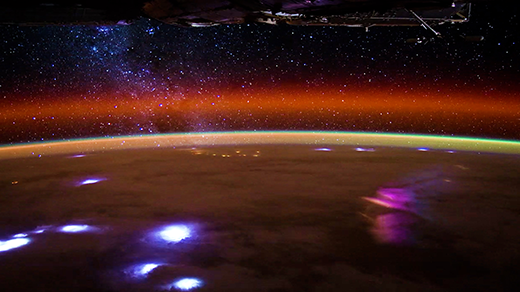
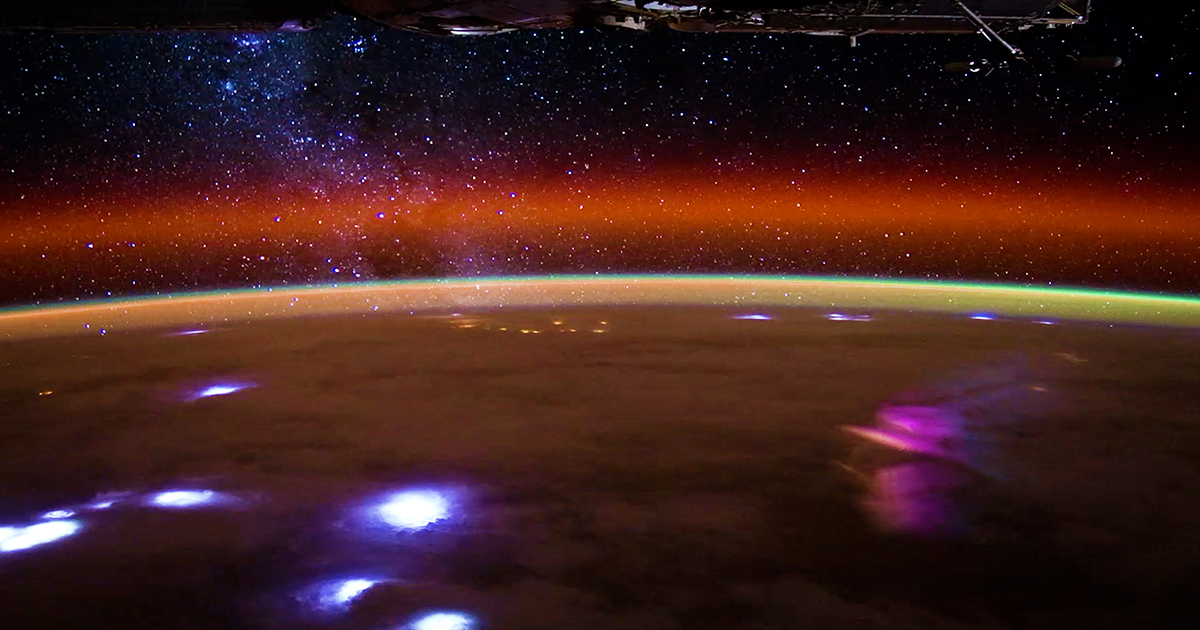
Most people picture lightning as a downward bolt from cloud to ground. In reality, the majority of lightning occurs within the cloud itself (intra-cloud). The visible cloud-to-ground strokes we see are just one type. Even more bizarre: sprites and blue jets are large-scale electrical discharges that shoot upward from thunderclouds into the upper atmosphere. Sprites occur above strong positive cloud-to-ground strokes and are linked to the same runaway breakdown processes. These high-altitude phenomena prove that lightning is not just a local weather event but a global electrical circuit.
10. The Search for Answers Is More Intense Than Ever
Researchers now use a combination of high-speed cameras, arrays of electric field sensors, satellite observations, and rocket-triggered lightning (where a small rocket tows a wire into a storm to create a controlled strike). Projects like the Lightning Mapping Array and the Atmosphere-Space Interactions Monitor (ASIM) on the International Space Station are collecting unprecedented data. Joseph Dwyer and his colleagues continue to refine the runaway breakdown theory, while also investigating whether antimatter (positrons) might be produced in lightning. The answer to “What causes lightning?” is getting more interesting—and more cosmic—every year.
From distant galaxies to your backyard thunderstorm, the humble flash of lightning connects our planet to the most energetic processes in the universe. What we once thought was a simple static spark has become a window into particle physics, cosmic rays, and the fundamental nature of electricity. As new experiments and space-based observatories come online, expect even more surprising twists in the story of lightning.