AI Revolutionizes Exoplanet Discovery: RAVEN Unearths Over 100 Hidden Worlds in TESS Data
The RAVEN AI System: A New Tool for Planet Hunting
Astronomers have harnessed the power of artificial intelligence to accelerate the search for exoplanets, deploying a sophisticated system named RAVEN (a neural network trained for exoplanet detection) on data from NASA’s Transiting Exoplanet Survey Satellite (TESS). By sifting through millions of stellar light curves, RAVEN has successfully identified and confirmed over 100 exoplanets—including 31 entirely new worlds—and flagged thousands of additional promising candidates for follow-up study. This breakthrough demonstrates how machine learning can drastically speed up the painstaking process of finding planets beyond our solar system.
How RAVEN Works
Traditional exoplanet hunting relies on the transit method: a planet passing in front of its star causes a tiny, periodic dip in brightness. While effective, this method produces enormous amounts of data that humans and basic algorithms struggle to analyze efficiently. RAVEN, a deep-learning model, was trained on known exoplanet signals and non-planetary false positives (such as eclipsing binary stars or stellar activity). It learned to recognize subtle patterns that indicate a genuine transit, while ignoring noise and instrumental artifacts. The AI then scans TESS light curves autonomously, prioritizing the most promising signals for human verification.
Training on TESS Data
TESS, launched in 2018, observes nearly the entire sky, focusing on bright, nearby stars. Its high-cadence observations produce vast datasets—perfect for an AI like RAVEN. The team trained their model on a subset of TESS data with known planetary candidates, then applied it to the full archive. Initially, RAVEN flagged tens of thousands of potential transit signals, which were later filtered through additional vetting (including statistical tests and follow-up observations from ground-based telescopes). The result: a robust catalog of confirmed planets that would have taken years to uncover manually.
Key Discoveries: Rare and Extreme Planets
What makes this haul especially exciting are the rare and extreme worlds that RAVEN brought to light. These include planets with incredibly short orbital periods and others that defy conventional theories of planet formation and survival.
Ultra-Short Period Planets
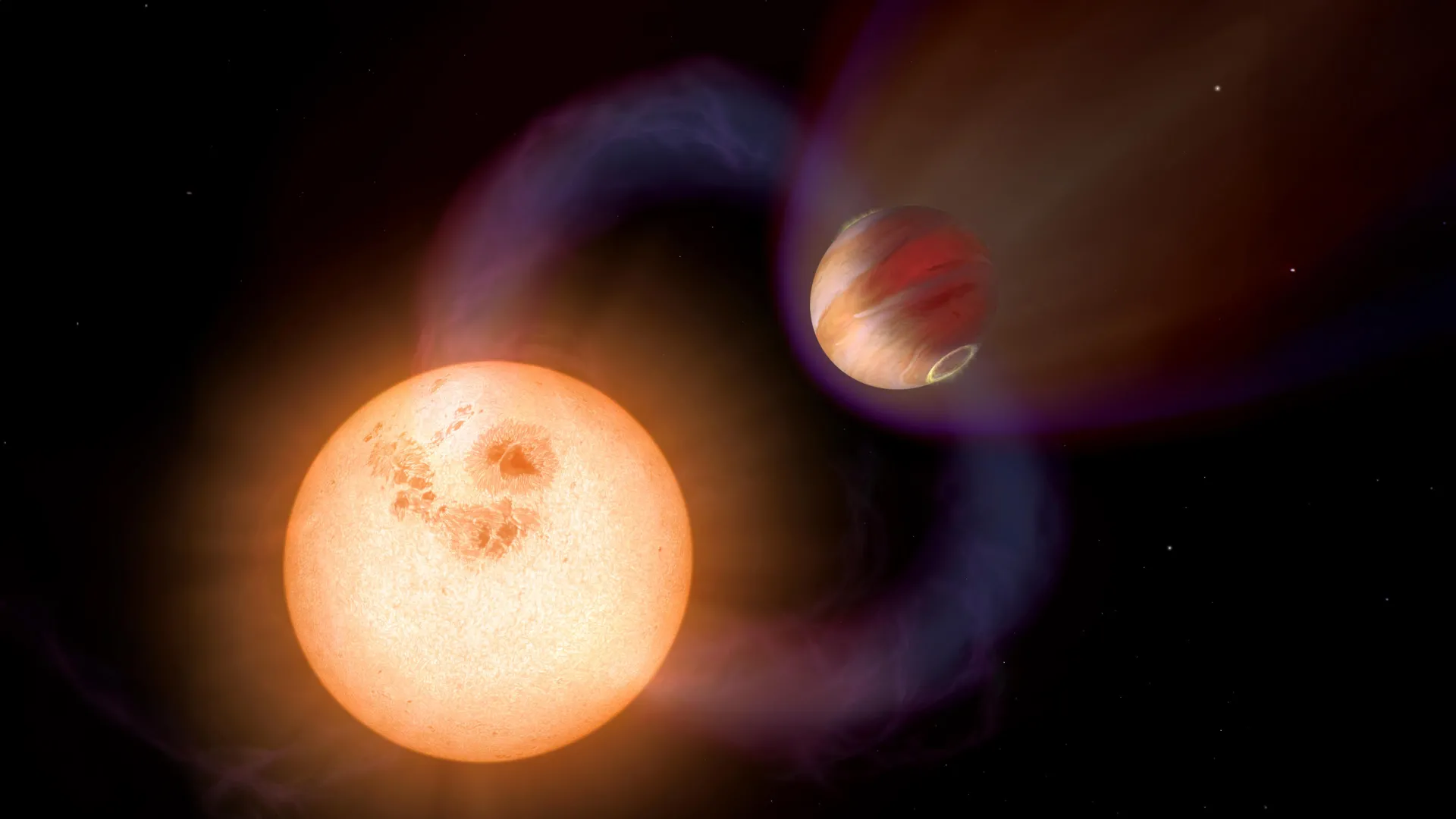
Among the confirmed planets are several ultra-short period (USP) planets—worlds that complete a full orbit around their star in less than 24 hours. These fiery bodies orbit extremely close to their host stars, often at distances well inside the orbit of Mercury. Their existence challenges models of planetary migration and atmospheric escape, as such close proximity would typically strip a planet of its atmosphere or even cause it to spiral into the star. Yet RAVEN found multiple examples, suggesting that USPs may be more common than previously thought.
Planets in the Neptunian Desert
Another intriguing group of discoveries lies in the so-called “Neptunian desert”—a region of parameter space (typically hot, close-orbiting planets) where Neptune-sized worlds seem to be almost entirely absent. This scarcity is thought to arise because such planets’ low densities make them vulnerable to atmospheric stripping by stellar radiation. RAVEN identified several planets residing in this desert zone, forcing astronomers to rethink why any Neptune-sized planets survive there at all. Are they unusually dense? Did they form late? These questions open new avenues for research.
Implications for Astrophysics and Future Missions
The success of RAVEN has broader implications beyond simply adding numbers to the exoplanet census. It demonstrates that AI can be a reliable partner in science discovery, especially when dealing with massive datasets. By automating the detection pipeline, researchers can focus their efforts on characterizing the most interesting exoplanets—measuring their atmospheres, masses, and orbital dynamics. The system also provides a blueprint for analyzing data from upcoming missions like the James Webb Space Telescope and the Nancy Grace Roman Space Telescope, both of which will generate even more complex light curves.
Furthermore, the discovery of planets in extreme environments (USPs and the Neptunian desert) helps refine our understanding of planetary formation, migration, and survival. Each new world acts as a natural laboratory for testing theories about how planets interact with their stars over billions of years.
What Comes Next?
The RAVEN team plans to retrain their AI with the newly confirmed planets, further improving its accuracy. They also intend to release a public catalog of the identified candidates, enabling citizen scientists and other researchers to contribute follow-up observations. With TESS continuing its mission and other surveys coming online, the age of AI-driven exoplanet discovery has only just begun.
As astronomer Dr. Elena Seidel (lead scientist on the project) remarked, “RAVEN has shown us that there are many hidden worlds waiting to be found in data we already have. We’re just scratching the surface.”
In summary, the combination of NASA’s TESS mission and a powerful AI like RAVEN is opening a new window onto the galaxy, confirming that even the rarest and most extreme exoplanets are more abundant than we ever dared to imagine.